
Discover every infrastructure asset.
Govern all of it automatically.
Curate connects to every Git repository and cloud account in your organization and builds a complete, real-time inventory of every IaC module, deployed resource, and configuration asset, including everything that was never codified.
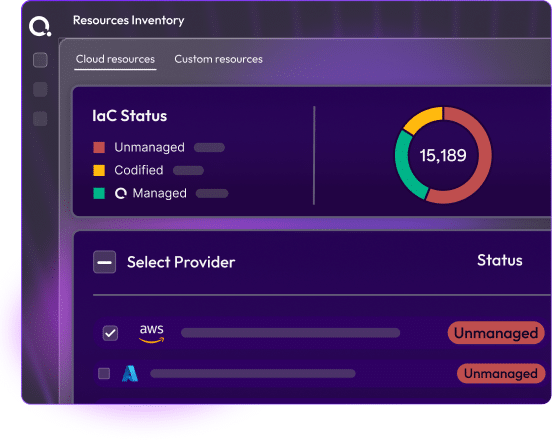
One unified inventory.
Every asset, everywhere,
continuously updated.
Curate connects to every source simultaneously, Git repositories for IaC and automation assets, cloud accounts for deployed resources, and policy files for compliance configurations. Everything lands in a single real-time inventory with three properties no fragmented toolset can match.

Auto-Discover
Finds every asset across every connected source, active, dormant, unmanaged, or forgotten. Nothing requires manual entry.

Real-time Inventory
The inventory updates continuously. New resources appear automatically. No scheduled scans. No stale data.

Full Visibility
Every asset carries its governance status. Codified, Managed, or Unmanaged. Platform teams always know exactly where they stand.
Most organizations don’t know what automation they have, or what infrastructure is running outside it.
Curate finds both.
Platform teams manage infrastructure across many Git repositories and cloud accounts. Curate connects to all automatically, surfacing every automation asset and deployed resource, resulting in a reliable inventory for your organization.








Three infrastructure problems that compound each other and get worse over time

You Don’t Know What Automation Your Organization Has
IaC files gather in many repositories. Teams duplicate modules, and outdated automation is used in live pipelines, complicating governance and reuse.

Outside IaC, Infrastructure Lacks Ownership And Documentation
Cloud resources provisioned without IaC or tagging accumulate, leading to potential security or cost issues.

Compliance Gaps Appear During Audits
Without discovery, policy files drift from reality. Audit findings reveal long-standing issues, with slow remediation. Governance has blind spots.
Three capabilities that close the visibility gap
Infrastructure teams often manage blindly, unaware of their automation, external operations, or connections. Curate addresses all three from day one.
01
Lead Differentiator
Every Piece Of Infrastructure Automation In Your Organization, Found And Cataloged
Scans connected Git repositories for IaC files, Terraform modules, Helm charts, Kubernetes manifests, Ansible playbooks, CloudFormation templates, and shell scripts. Your organization has a single source of truth for automation and dependencies.
02
Cloud To Code
Console-Provisioned Resources Discovered And Codified Automatically
Unmanaged assets are created automatically. Select an Unmanaged resource, and Curate generates a Terraform module defining its configuration quickly. This brings shadow IT under governance.
03
Metadata and dependencies
Every Asset Carries Full Context, What It Is, What It Depends On, And What Depends On It
Inventory assets have metadata such as configurations, ownership, and deployment status. Teams can view interactions and make changes while understanding impacts. The AI Copilot generates blueprints respecting infrastructure relationships.
Every resource deployed via the console, codified in under 60 seconds

From connection to governed,
reusable infrastructure assets
Six steps. From your first Git connection to a fully governed, AI-ready infrastructure inventory.
Connect your sources
Connect Curate to your Git repos and cloud accounts with read-only access—no write permissions needed. It supports AWS, Azure, and any Git provider for Terraform, Helm, CloudFormation, Kubernetes, Ansible, or shell scripts. GCP support is coming soon.
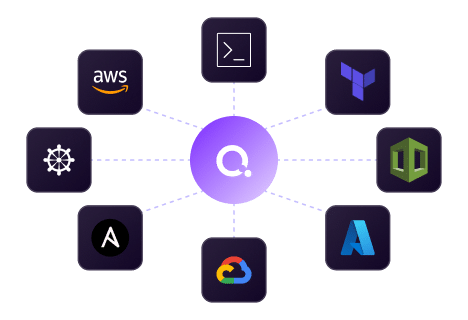
Discover your automation estate
Curate scans all connected Git repositories to create a comprehensive catalog of every IaC file, including active modules, dormant templates, deprecated playbooks, and duplicates. Each file is indexed by type, location, owner, last-modified date, and deployment status, providing your organization with an unprecedented automation inventory.
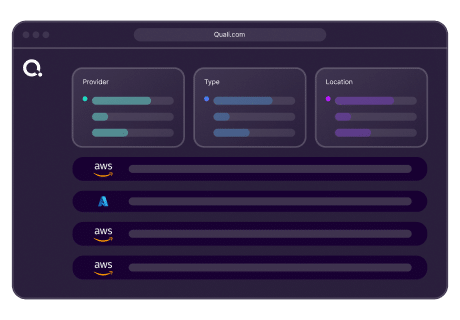
Discover deployed resources
Curate scans all cloud accounts, listing deployed resources, VMs, databases, and more by service type and region. It includes resources from console provisioning, scripts, and legacy infrastructure.
Understand governance state
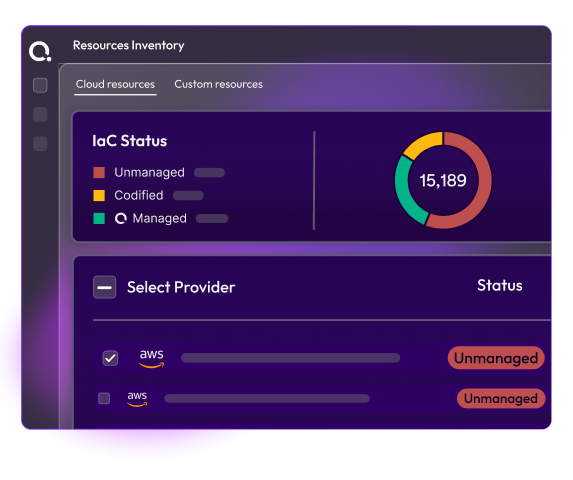
Assets are tagged as Codified, Managed, or Unmanaged. Codified means converted to IaC via Curate. Managed means deployed and governed via Torque. Unmanaged indicates deployment outside Torque or legacy infrastructure. This view shows platform teams their governance coverage and priorities.
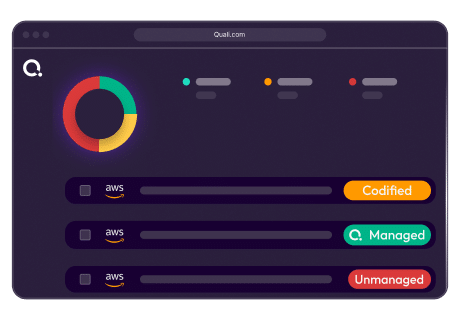
Convert any resource to IaC
Unmanaged infrastructure becomes governed Terraform in under a minute. Select any Unmanaged resource, and Curate generates a production-ready Terraform file defining its configuration. Download and commit it to your repository immediately. This is how unmanaged infrastructure gets codified without writing code.
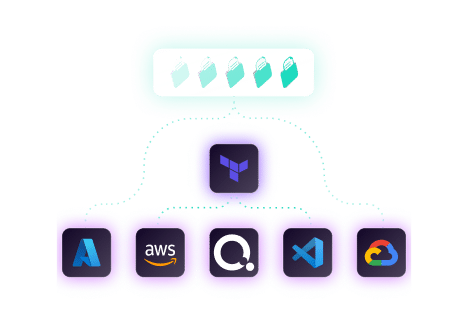
Generate blueprints with the AI Copilot
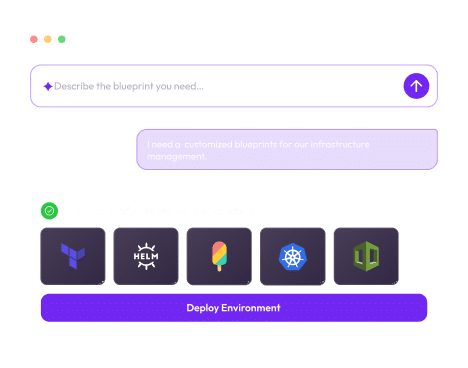
Natural language governs infrastructure from your inventory. The AI Copilot generates blueprints from prompts, selecting IaC modules, mapping dependencies, and producing deployable blueprints without YAML expertise. The blueprints use your governed assets, not generic templates.
Frequently Asked Questions
Curate discovers three categories of assets simultaneously. First, every IaC file across your connected Git repositories, Terraform modules, OpenTofu files, Ansible playbooks, CloudFormation templates, Helm charts, Kubernetes manifests, and shell scripts, whether actively deployed, dormant, or deprecated. Second, every live resource deployed across your connected cloud accounts, including resources that have no corresponding IaC definition. Third, policy and compliance files such as Rego policies and OPA configurations. All three are surfaced in a single unified inventory with metadata, ownership, and status.
Curate recognizes the following IaC and automation formats: Terraform (.tf, .tfvars), OpenTofu, Ansible playbooks and roles, AWS CloudFormation templates, Helm charts, Kubernetes YAML manifests, and shell scripts. On the cloud side, Curate connects to AWS, Microsoft Azure, and Oracle Cloud, with GCP support in progress. Configuration file types include YAML configs, JSON configs, and environment files. Policy formats include Rego and OPA configurations.
These are the three governance statuses Curate assigns to every discovered asset. Codified means the resource has been converted to a Terraform module via Curate. Managed means it was deployed via Torque, whether codified or not. Unmanaged means it was deployed directly via the cloud account, outside Torque governance. The Unmanaged category is typically where shadow IT, console-provisioned resources, and legacy infrastructure sit. Filtering to Unmanaged gives platform teams a direct view of their governance debt.
Read-only access to your cloud accounts and Git repositories. Curate does not require write permissions and does not modify, deploy, or delete any resources. Your credentials are managed centrally within Torque and are never exposed to individual users. This is intentional, Curate is a discovery and inventory layer, not an execution layer.
The Copilot has access to every asset Curate has discovered and indexed. When you describe an environment in natural language, the Copilot selects IaC modules from your actual, validated inventory, not generic templates from a library. That means the generated blueprint uses your real assets, respects the dependencies Curate has mapped, and is deployable immediately. The quality and accuracy of what the Copilot produces is directly tied to the completeness of what Curate has discovered.
Git repository discovery works with any Git provider and supports all IaC formats used on GCP, including Terraform and Kubernetes YAML. Cloud account discovery for GCP is currently in progress and will be available in an upcoming release. AWS and Azure cloud account connections are fully supported today.
Explore Every Capability
Curate
Curate is Day 0. Here’s what comes next. The inventory Curate builds is the foundation every other Torque capability runs on. The completeness of what Curate discovers directly determines the coverage of what Operate can govern.
Self-Service
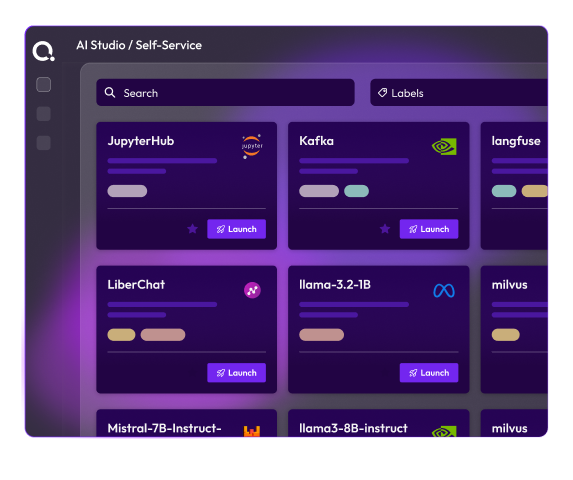
Deploy governed environments on demand, for every team. Governed blueprint catalog, AI Environment Designer, portal / ITSM / IDE / CI-CD access. Curate builds the inventory. Self-Service puts it to work.
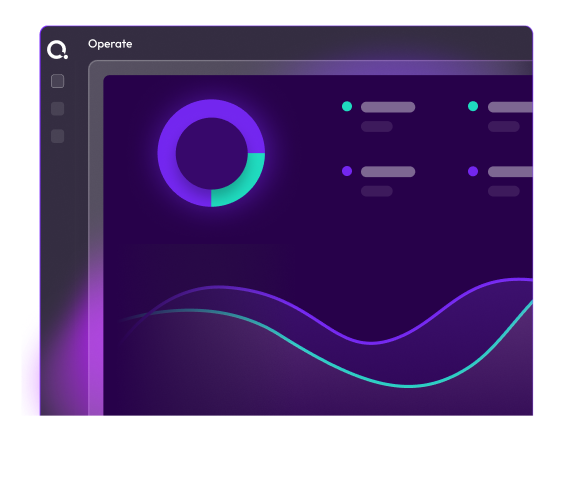
Operate
Govern, optimize, and continuously improve what you’ve deployed. Drift detection, cost attribution, AI remediation, FinOps and SRE intelligence. Operate monitors everything Curate has inventoried.
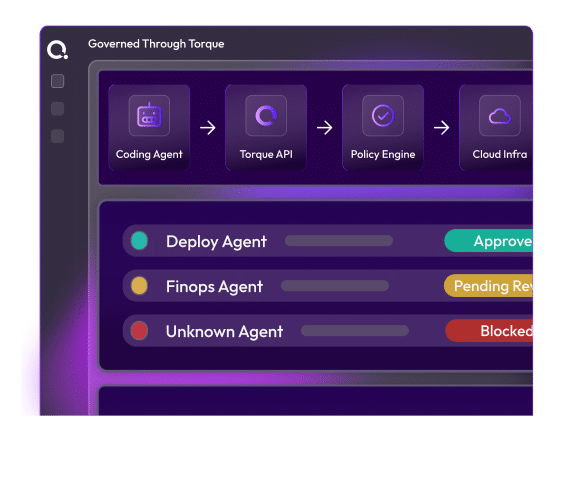
AI-Agentic
The AI Copilot that powers blueprint generation and environment design. The AI Environment Designer is part of the broader AI Copilot capability. Learn how Agentic AI operates across the full Torque platforms, from blueprint generation to operational remediation.
Explore Curate in a live playground
No installation. No configuration. Connect to a pre-loaded environment and see Curate discover, inventory, and govern infrastructure across a live technology stack.
On the Playground you’ll find:
Pre-loaded blueprints across IaC, containers, and GPU infrastructure, ready to launch in one click.
Real governed environments that provision, enforce policy, and tear down automatically.
No credentials required, explore the full platform experience without connecting your own cloud.
Live cost and drift tracking so you can see the governance layer in action from day one.